Professional Ford Coolant System Service in Brunswick, ME
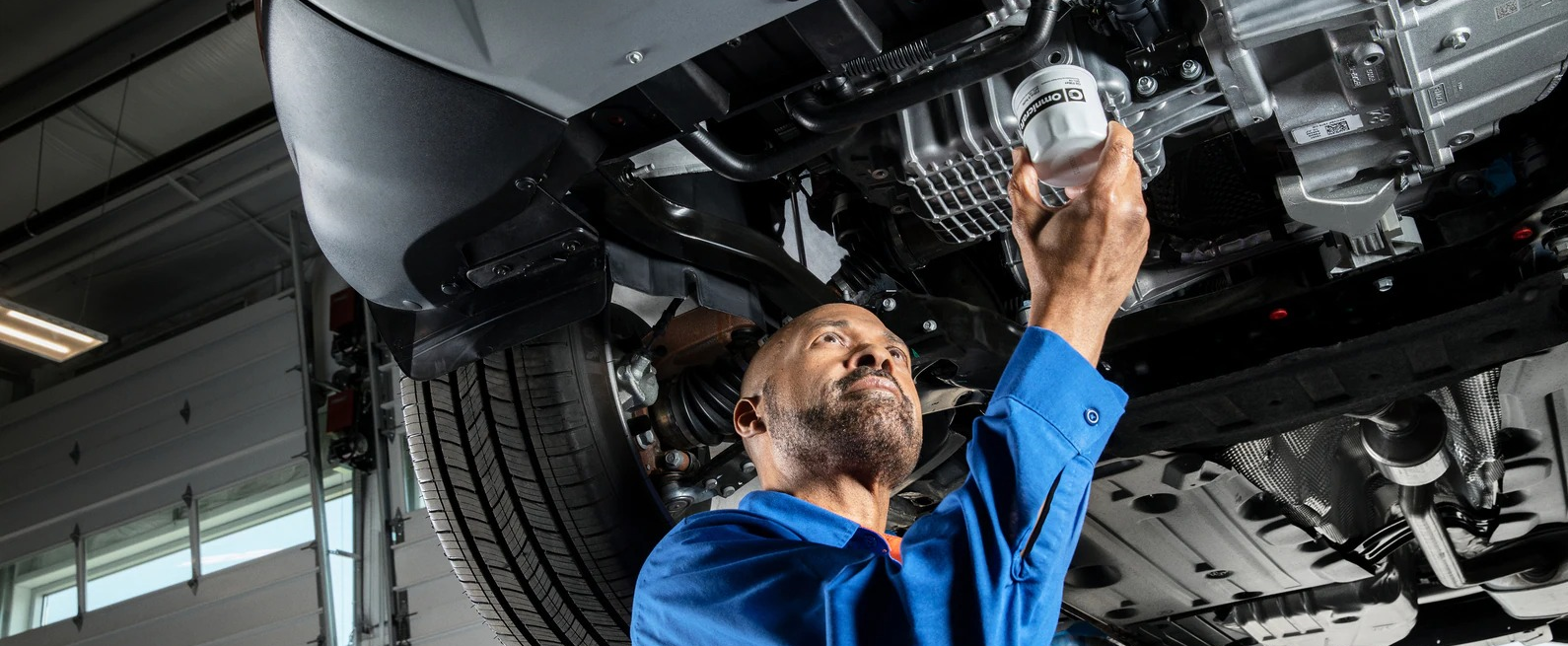
Ford Coolant System Service in Brunswick, ME — Darling's Brunswick Ford
Darling's Brunswick Ford provides complete coolant system inspection, flush, and repair for Ford vehicles in Brunswick, Topsham, Bath, and Freeport. Maine's wide temperature range — from sub-zero January cold to summer heat on Route 1 — demands that Ford coolant chemistry remain effective at both extremes. Our certified technicians on Bath Road test coolant concentration and condition, inspect the radiator, thermostat, water pump, and hoses, and service the system using Ford-specified coolant to protect your engine through every Maine season.
The cooling system is the least visible major system on a Ford — it operates silently in the background, and most Brunswick drivers don't think about it until a temperature gauge climbs or a puddle appears under the vehicle. That invisibility is exactly what makes service interval adherence important: coolant doesn't announce its degradation. Ford coolant contains chemical additives — corrosion inhibitors, water pump lubricants, and pH buffers — that deplete over time regardless of the coolant's color or apparent condition. Coolant that has lost its inhibitor package looks identical to fresh coolant but allows internal corrosion to develop on aluminum engine components, radiator tubes, heater core passages, and water pump impeller surfaces simultaneously. By the time visible rust or particulate contamination appears in the coolant reservoir, the internal corrosion that produced it has been underway for a significant period.
Brunswick's climate compresses the effective service window on both ends. Sub-zero January temperatures demand adequate freeze protection — a coolant mix that has been diluted by repeated top-offs with water rather than 50/50 mix may not provide freeze protection to the rated temperature, and a cracked radiator or split hose from coolant freeze is among the most expensive cold-weather consequences. Summer heat on Route 1 and I-295 combined with the engine load of towing along coastal access roads pushes coolant temperatures toward the upper end of the operating range — conditions where depleted coolant with reduced inhibitor protection allows the aluminum-to-coolant corrosion that ultimately produces the internal leak symptoms Brunswick drivers notice as white exhaust smoke or unexplained coolant loss. Schedule your coolant system service appointment online, or contact our Brunswick service team before your visit.
Signs Your Ford Needs Coolant System Service in Brunswick
- Temperature Gauge Running Higher Than Normal: A temperature gauge that climbs toward the high end of its normal range — or approaches the red zone — on the drive between Brunswick and Bath or on grades toward Topsham indicates the cooling system is not maintaining operating temperature control. Any reading approaching the red zone warrants pulling over and addressing the situation before engine damage occurs
- Coolant Leak Under the Vehicle: A puddle of green, orange, pink, or yellow fluid (depending on Ford coolant type) under the front of the vehicle after parking indicates a cooling system leak — which may be at a hose connection, radiator fitting, water pump seal, or heater core. Even a small leak represents coolant loss that reduces system capacity and freeze protection
- Low Coolant Level in the Reservoir: A coolant reservoir that consistently requires topping off indicates an external leak somewhere in the system, or an internal leak where coolant is entering the combustion chamber and exiting through the exhaust — a more serious condition that produces white smoke at the tailpipe
- White Smoke or Steam from the Exhaust: White exhaust smoke that persists after the engine is fully warmed and doesn't clear — distinguished from the normal condensation steam on cold Brunswick mornings that disappears within a few minutes — indicates coolant entering the combustion chamber through a head gasket failure or internal crack
- Poor Cabin Heat on Brunswick Winter Mornings: The heater core is part of the cooling system circuit — it uses engine coolant as the heat source for cabin heating. Inadequate cabin heat on cold Brunswick mornings, particularly accompanied by low coolant level, points to a partially blocked or leaking heater core, or a thermostat that isn't opening fully to circulate warm coolant
- Rusty, Muddy, or Discolored Coolant: Coolant visible in the reservoir that appears rust-colored, brown, or contains visible particulate has lost its inhibitor chemistry and allowed internal corrosion to develop — a condition that requires a complete system flush, not just a top-off, to remove the corrosion products before they cause further damage to the water pump and heater core
What Ford Coolant System Service Includes at Darling's Brunswick
- Coolant Condition & Concentration Testing: Testing coolant freeze protection point, pH level, and inhibitor depletion — the three conditions that determine whether coolant is still providing adequate protection for Brunswick's temperature extremes and aluminum engine component protection
- Cooling System Pressure Test: Pressurizing the cooling system to specification and checking for pressure loss — the most reliable method for identifying external leaks at hose connections, radiator fittings, water pump weep holes, and heater core that may not produce a visible puddle at operating pressure but leak when the system is pressurized to its rated cap pressure
- Thermostat Inspection & Testing: Verifying thermostat opening temperature and full-open position — a thermostat that sticks open prevents the engine from reaching operating temperature, causing poor fuel economy, increased emissions, and inadequate heater output on cold Brunswick mornings; a thermostat that sticks closed causes rapid overheating
- Radiator Inspection: Checking radiator fin condition, tank integrity, and inlet/outlet fitting sealing — road salt spray and stone impacts on Brunswick's roads accelerate external radiator corrosion and fin damage that reduces cooling capacity over time
- Water Pump Inspection: Checking water pump for weep hole leakage, bearing noise, and impeller condition — water pump bearing failure is often audible as a grinding or whining from the front of the engine before the seal fails and produces a coolant leak
- Hose & Clamp Inspection: Checking upper and lower radiator hoses, heater hoses, and bypass hoses for softness, cracking, and clamp integrity — rubber hoses harden and crack with age and heat cycling, and the interior of hoses can develop electrochemical degradation that isn't visible externally
- Coolant Flush & Refill: Draining the system completely, flushing to remove contamination and corrosion products, and refilling with Ford-specified coolant at the correct 50/50 concentration — restoring full freeze protection, corrosion inhibitor chemistry, and water pump lubrication for Brunswick's climate demands
Why Coolant System Service Matters for Brunswick, ME Ford Drivers
The cooling system is one of the few systems on a Ford where neglect produces consequences that are disproportionately expensive relative to the service cost. A coolant flush and fill at Darling's Brunswick Ford costs a fraction of what a head gasket failure costs — and head gasket failure is among the most direct consequences of allowing coolant to degrade past its effective inhibitor life. The internal corrosion that depleted coolant produces on aluminum engine components, radiator tubes, and heater core passages is cumulative and doesn't reverse when fresh coolant is added. Catching coolant degradation at the service interval — before visible contamination appears — avoids the downstream component damage that contaminated coolant causes while it circulates.
Brunswick's road salt environment adds an external corrosion dimension that inland markets don't face at the same intensity. External cooling system corrosion at hose clamps, radiator fittings, and coolant reservoir connections develops faster in the coastal salt-spray environment along Bath Road and Route 1. Annual cooling system inspection at Darling's Brunswick Ford identifies external corrosion at connection points before it reaches the stage of a hose fitting that fails and drains the system on a Brunswick road.
If your Ford's condition has you considering an upgrade, use our trade-in tool to see what your vehicle is worth, explore your financing options, or connect with our finance department. Ready to see what's current? Schedule a test drive at our Brunswick location on Bath Road.
Ford Coolant System Service FAQ — Brunswick, ME
- Q: How often should coolant be changed on my Ford in Brunswick?
Ford specifies coolant service intervals by mileage and time — most current Ford models use OAT (Organic Acid Technology) coolant rated for 100,000 miles or 10 years at first fill, with subsequent intervals of 50,000 miles or 5 years. However, Brunswick's climate makes time-based intervals worth taking seriously even on lower-mileage vehicles. Coolant that has been in the system for five years has lost significant inhibitor chemistry regardless of how few miles the vehicle has traveled. Our technicians test coolant condition rather than defaulting to a mileage calculation — actual inhibitor depletion and pH determine whether service is due. - Q: What type of coolant does my Ford need in Brunswick's climate?
Ford specifies different coolant formulations across its model lineup — most current Ford vehicles use the gold-colored Motorcraft Premium Gold Engine Coolant (OAT formula), but some older models use the yellow-green Motorcraft Premium Engine Coolant. Mixing coolant types degrades the inhibitor chemistry of both and accelerates corrosion rather than preventing it. Our technicians at Darling's Brunswick Ford use the correct Ford-specified coolant for your exact model at every service — not a universal aftermarket formula that may not match Ford's corrosion protection requirements for aluminum engine components. - Q: Can Brunswick's cold weather damage my Ford's cooling system?
Yes. Coolant that has been diluted below the correct 50/50 concentration — typically through repeated top-offs with water rather than premixed coolant — may not provide adequate freeze protection for Brunswick's coldest temperatures. Coolant that freezes in the block, radiator, or hoses expands as it solidifies and can crack the radiator, split hoses, or in severe cases crack the engine block. Verifying coolant freeze protection concentration before Brunswick's winter season is a straightforward check that prevents one of the more expensive cold-weather failure modes on any vehicle. - Q: How do I know if my Ford has an internal coolant leak in Brunswick?
The most common indicators are white exhaust smoke that persists after the engine is fully warmed, unexplained coolant loss without any visible external leak, a sweet coolant smell from the exhaust, or oil that appears milky or foamy on the dipstick — coolant mixing with engine oil. Any of these conditions indicates coolant entering the combustion chamber or the oil circuit through a failed head gasket or internal crack, and requires prompt diagnosis at our Bath Road service center. Continuing to drive with an internal coolant leak accelerates the damage and raises repair cost significantly. - Q: How long does coolant system service take at Darling's Brunswick Ford?
A coolant condition test and system inspection takes 30 to 45 minutes. A complete coolant flush and refill runs 60 to 90 minutes. Thermostat replacement adds approximately one hour to the service depending on engine configuration and access. Radiator or water pump replacement varies by model — our Bath Road team provides accurate time estimates after inspection and keeps Brunswick, Topsham, and Bath-area drivers informed before any repair work begins. - Q: Should I get my Ford's cooling system inspected before winter in Brunswick?
Yes — a pre-winter cooling system inspection is one of the most practical service appointments a Brunswick Ford driver can schedule. Confirming freeze protection concentration, inspecting hose condition, and verifying thermostat function before November gives our technicians the opportunity to address anything marginal before Brunswick's temperatures test the system. A hose that is soft and borderline on a 45°F October day is a hose that may split on a January morning — catching it during a scheduled inspection costs a fraction of the roadside consequences and the tow to our Bath Road service center.
Where Can I Find Ford Coolant System Service Near Me in Brunswick, ME?